
Spaced Repetition Explained: Remember More in Less Time
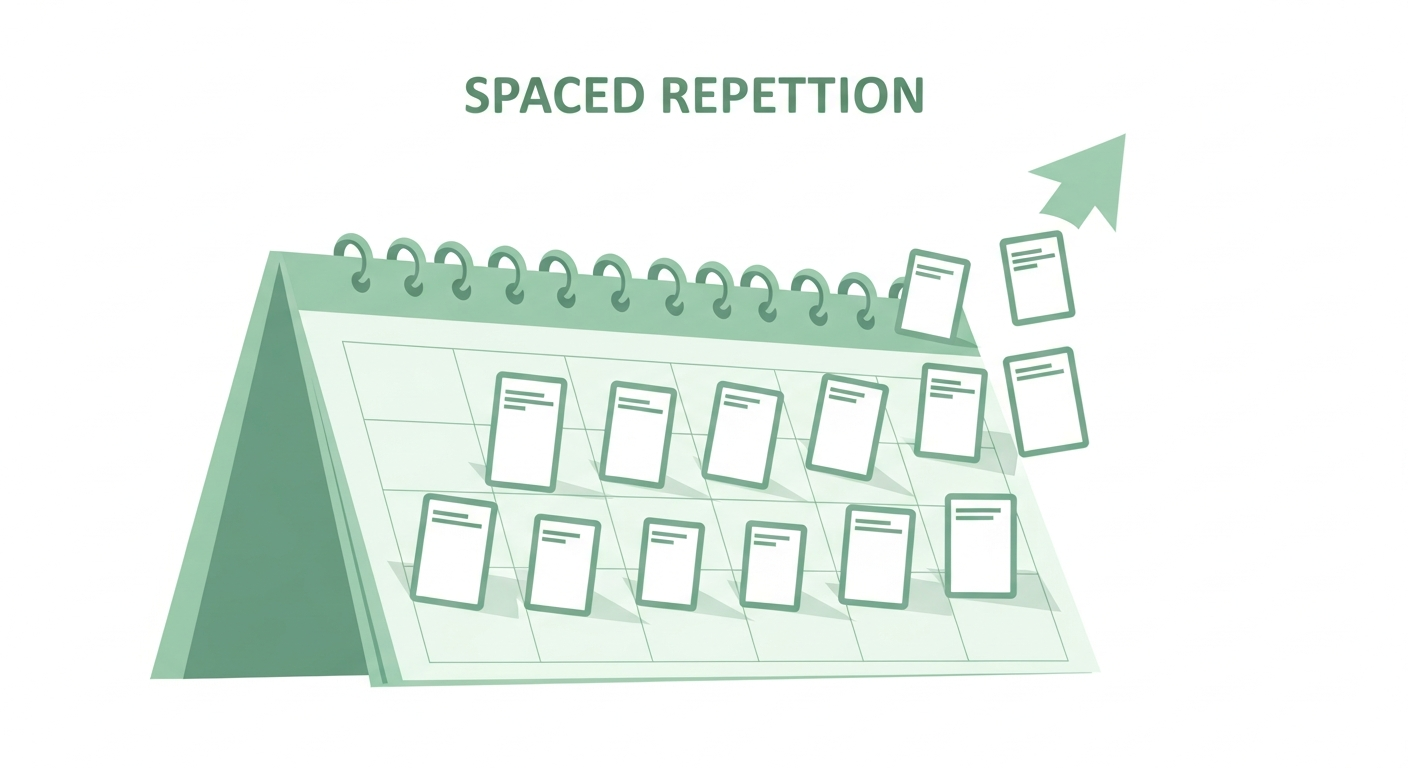
Your brain forgets on a predictable schedule. Spaced repetition works with that schedule instead of fighting it, so you spend less time reviewing and remember far more.
The forgetting curve
After you learn something, your memory of it fades quickly at first, then more slowly. If you review just as a memory starts to fade, you reset the curve and the next drop is gentler. Repeat this a few times and the knowledge becomes nearly permanent.
The ideal review intervals
A classic pattern looks like this: review after 1 day, then 3 days, then a week, then two weeks, then a month. Cards you find easy get pushed further out; cards you struggle with come back sooner. The result is that your time goes exactly where it is needed.
Why it pairs perfectly with active recall
Spaced repetition decides when to review; active recall decides how. Each review should be a self-test, not a re-read. Together they are the backbone of efficient studying.
Let an app schedule it
Tracking intervals by hand is tedious and error-prone. AI flashcards in Notebook Study schedule every card automatically based on how well you knew it, so you just review what pops up each day. Build your decks once from your notes and let the system handle the timing.
New to this? Start with active recall and making flashcards from your notes.