
5 Note-Taking Methods Every Student Should Know
Notes are only useful if you can revise from them. The method you choose shapes how easily you can review and test yourself later. Here are five worth knowing.
1. The Cornell method
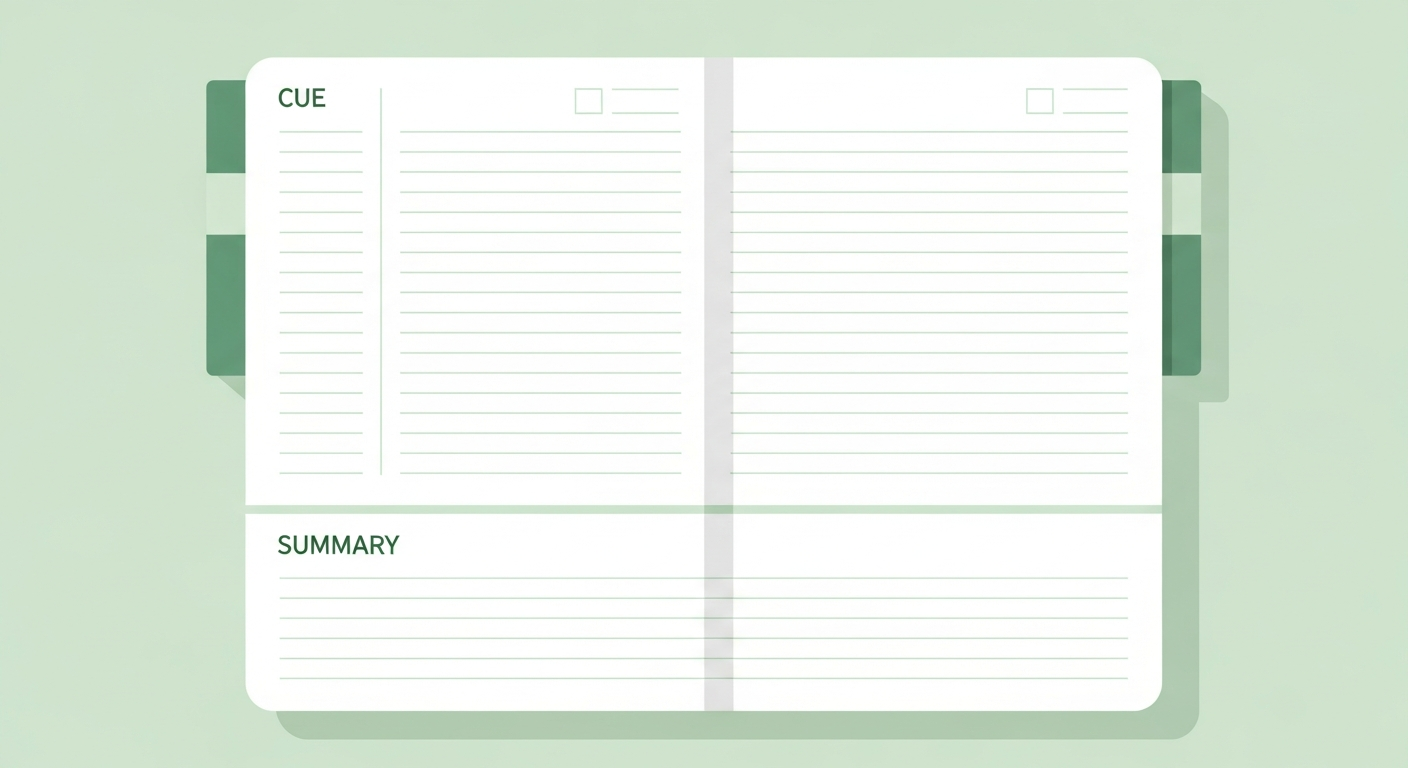
Split the page into cues, notes, and a summary. The cue column is built for active recall — cover the notes and answer from the cues. Ideal for lectures and dense subjects.
2. The outline method
Headings and indented sub-points create a clean hierarchy. Fast to write and easy to scan, it suits structured topics. A block editor makes outlining effortless.
3. Mind mapping
Put the main idea in the center and branch outward. Great for connecting concepts and for visual learners brainstorming an essay.
4. The charting method
For facts that compare across categories — dates, events, properties — a table makes patterns jump out. Perfect for history and science.
5. The sentence method
One idea per line, fast and simple. Best for fast-moving lectures; clean it up afterward into one of the structured methods above.
Turn any method into study tools
Whichever you pick, you can generate flashcards and a quiz from the result. For an even smarter workflow, see AI notes.
Open the notes editor and try the Cornell method on your next lecture.